
The Reserve Bank of India on Thursday raised its inflation projection to 5.1-4.7 per cent for the second half of the current fiscal on the back of spike in prices of vegetables such as onion and tomatoes.
The supply-side driven inflationary pressures, from food or fuel prices, would be mitigated by a neutral stance and a prolonged pause on rates, says Gaurav Kapur.

GST collections in March touched a record high of over Rs 1.23 lakh crore, a 27 per cent growth over the year-ago period, the Finance Ministry said on Thursday. "GST revenues crossed above Rs 1 lakh crore mark at a stretch for the last six months and a steep increasing trend over this period are clear indicators of rapid economic recovery post pandemic," the ministry said. Closer monitoring against fake-billing, deep data analytics using data from multiple sources including GST, income tax and customs IT systems and effective tax administration have also contributed to the steady increase in tax revenue over last few months, it added.

Spiralling prices pinched the pocket of consumer as edible oil, fuel and many other commodities turned dearer this year amid pandemic-induced disruptions but the inflationary pressure is anticipated to ease, though marginally, in the coming months. As consumers, at retail as well as wholesale levels, are willy-nilly learning to live with the new normal of curbs to contain the spread of coronavirus infections, experts are of the view that elevated inflation is likely to stay longer. After dealing with the devastating blows from the second COVID wave, especially during the April-June period, the economy is well on the revival path but the emergence of Omicron might unsettle the recovery trajectory in the short term.

The losses in state elections in Rajasthan, Madhya Pradesh, and Chhattisgarh have put the ruling party under pressure to announce swift measures aimed at addressing rural distress and lack of employment.

We will find it difficult to exceed an average of 5 per cent growth in the medium term, warns Shankar Acharya, the former chief economic adviser.

'Companies with a strong business case and healthy balance-sheet should sail through and emerge more robust in the future.'

Here are the key decisions announced by the Reserve Bank of India on Thursday.

RBi pushes for reinvigorating private investments, clearing infra bottlenecks and providing big thrust to Pradhan Mantri Awas Yojana.

In a bid to resurrect Air India privatisation, the government is planning to give flexibility to potential investors to decide on the humongous debt with the national carrier, a top official has said. The flexibility to potential investors on the quantum of the Rs 60,074 crore debt that they want to absorb will replace the current condition of the buyer taking over more than a third of the debt and transferring the rest to a special purpose vehicle, Department of Investment and Public Asset Management (DIPAM) secretary Tuhin Kanta Pandey said.
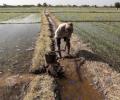
Among the states due for election next year are AP, Haryana and Odisha, which have a fair share of agri credit. If these states individually announced debt relief, the combined waiver would be at least around Rs 600 bn to Rs 700 bn. Clearly, this will be a frightening challenge for Indian banks.

It said that the GDP growth has averaged 7.3 per cent from 2014-15 to 2017-18, which is the highest among the major economies of the world.

Market players said the sell-off was triggered by pessimism that the government may not be able to balance growth with macro-stability.

The Reserve Bank on Friday projected retail inflation to be in 5-5.2 per cent range during the first half of the next fiscal year, expecting further softening of vegetables prices in near term. Also, it has lowered the retail inflation forecast for the current January-March quarter of 2020-21 fiscal at 5.2 per cent. The Reserve Bank (RBI) has kept the key policy rate unchanged at 4 per cent, with an accommodative stance, so as to ensure that inflation remains well within the target, Governor Shaktikanta Das said while announcing the last monetary policy of 2020-21.

How the 4 ministries have performed

IMF, which has also lowered its global economic growth forecast for 2016 and 2017 by a marginal 0.1 per cent to 3.1 and 3.4 per cent respectively, recommended six 'reform priorities' for India

We are more positive on the consumption theme than infrastructure or investment sectors, where government decisions will make a difference.
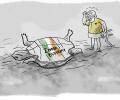
'The outlook for private investment, which has been such a weak link for India for so long, remains challenging.'

The upward revision in growth forecast for current fiscal comes in the backdrop of GDP expanding 8.2 per cent in April-June quarter, higher than Fitch's expectation of 7.7 per cent.

'There are deeper, underlying, forces at work and we need institutional arrangements to guard against them.'

Finance Minister Arun Jaitley on Friday tabled the pre-Budget Economic Survey in the Lok Sabha.
ADB too had projected Indian's economic growth for current fiscal at 7.6 per cent

'Our focus on fresher induction is high, given that they come in with certain advantages.' 'They do not have an unlearning process as seen in senior employees.'

'We get to know secrets such as some of India's top-rated firms do not always make payments when due and many State-owned, listed, enterprises that borrow in bond markets default regularly.' 'Without naming the bank, he says that ever-greening of poor loans by a part of India's shadow banking lay at the doorstep of India's banking, notably 'one private bank'.' Viral Acharya's Quest for Restoring Financial Stability in India won't be music to many ears, observes Tamal Bandyopadhyay.
The global financial crisis has empowered fiscal conservatives in India.

In India, economic activity slowed substantially in 2019, with the deceleration most pronounced in the manufacturing and agriculture sectors, whereas government-related services sub-sectors received significant support from public spending, the Bank said.
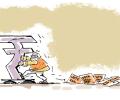
'Since the growth is not fast enough to provide jobs for the young, the fallout will be political and social,' warns T N Ninan.

Fitch Ratings on Monday said the shock to economic activity from the latest wave of COVID-19 pandemic will be less severe than the one in 2020, but recovery is likely to be delayed as economic activity dropped in April-May. The global rating agency said there are growing indications that the latest wave of COVID-19 infections will add to risks among financial institutions (FIs) and anticipates that the Reserve Bank of India (RBI) may introduce additional measures to support the financial sector if indications of economic stress mount.

This amount will include Rs 13,100 crore that Economic Affairs Secretary Subhash Garg has been publicly seeking from the central bank's contingency reserve fund since 2017-18 (FY18).

'The fiscal deficit target of 3.9 per cent of GDP seems achievable.'

The outlook for India's rating would improve if fiscal, inflation and infrastructure metrics get better, a global report said.
The government's capex spend is expected to rise and much of this is likely to be focussed on rural India, particularly for housing, roads and irrigation.
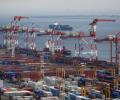
Exports of petroleum products, chemicals, pharmaceuticals, gems and jewellery, and engineering goods registered a positive growth.

Insurance companies are seeking a separate deduction limit of Rs 1 lakh for insurance premium payment under Section 80C of the Income Tax Act in the upcoming Union Budget to bring in more people under the ambit of insurance. The insurers also want reduction in the goods and services tax (GST) rate of 18 per cent currently applied on health insurance products to 5 per cent to make such products more affordable to common people. Finance Minister Nirmala Sitharaman will present the Union Budget for 2022-23 on February 1.

...but when they awaken, it's going to be overly optimistic to assume everybody will walk off the sleeping bed and come back to full life, Rajan noted.

The finance ministry has short listed 11 PSUs for a possible buyback of shares in the ongoing financial year

The budget-making exercise offers golden opportunities despite challenges, observes Shankar Acharya, former chief economic adviser to the Government of India.

India's second-largest telecom operator Bharti Airtel on Tuesday posted more than twofold year-on-year jump in its consolidated net profit for the March quarter to Rs 2,008 crore, buoyed by a lift in average revenue per user and an exceptional gain. The telco said its Q4 scorecard was backed by strong performance delivery across the portfolio and its CEO Gopal Vittal, in a statement, exuded optimism about opportunities in the coming years and Airtel being "well-poised" as a company. Airtel, which competes in the market with Reliance Jio and Vodafone Idea, as well as state-owned BSNL/MTNL, promised to maintain razor sharp focus on financial flexibility, optimising the capital structure and finance cost.

Anil Rego, CEO, Right Horizons, answers your personal income tax queries.

The NDA government was initially reticent about fleshing out its economic strategy for the future. But now that it has taken enough bold initiatives on the economic front it must have the confidence to tell us more about its approach going forward, says Abheek Barua.
